


One Island. One Reef. A Semester in the Water.
The water is so clear you see sixty feet to the bottom. Reefs rise like underwater mountain ranges, and reef sharks weave through channels where the shelf drops into the Columbus Passage, a deep ocean trench separating the Turks from the Caicos Islands. South Caicos is a 13-square-mile island with 1,500 residents and one of the Western Hemisphere's longest barrier reef systems. Everything here depends on the sea.
Students can work toward SCUBA certification through the first half of the semester while surveying transects, assessing fish diversity, and documenting invertebrate populations. Diving is never required: snorkelers run the same surveys without SCUBA. Between field days, students work alongside local fishers collecting conch catch data and survey conch, lionfish, and seagrass inside and outside the island's marine protected areas. Evenings bring gear drying on the line beside the day's data sheets.

What You'll Do

Queen Conch Population Assessment
Conduct eight-hour underwater visual assessments of conch size and age structure inside versus outside marine protected areas, then analyze data and create scientific posters.

Invasive Lionfish Surveys
Snorkel and dive to document lionfish behavior, habitat associations, and abundance, then dissect specimens to examine stomach contents and biological data.

Coral & Fish Biodiversity Transects
Conduct in-water assessments of coral cover, fish species diversity, and reef health using transects and biodiversity indices analyzed with R Studio.

Seagrass Research Methods
Four-hour in-water seagrass assessments measuring species distribution and macro-invertebrate abundance, with data analysis in R Studio.

North & Middle Caicos Expedition
Travel across the Turks and Caicos Islands to North Caicos, Middle Caicos, and Providenciales, discovering the history of the islands and how tourism and development are reshaping them.

Stakeholder Negotiation Simulations
Represent tourism, fishermen, NGO, and management perspectives in mock policy debates, then evaluate real MPA effectiveness through field data.
Field Sites
Dive sites, mangrove wetlands, and marine protected areas surrounding South Caicos serve as your interconnected research stations.

South Caicos Barrier Reef
The reef that wraps South Caicos, where students log coral health and fish diversity.

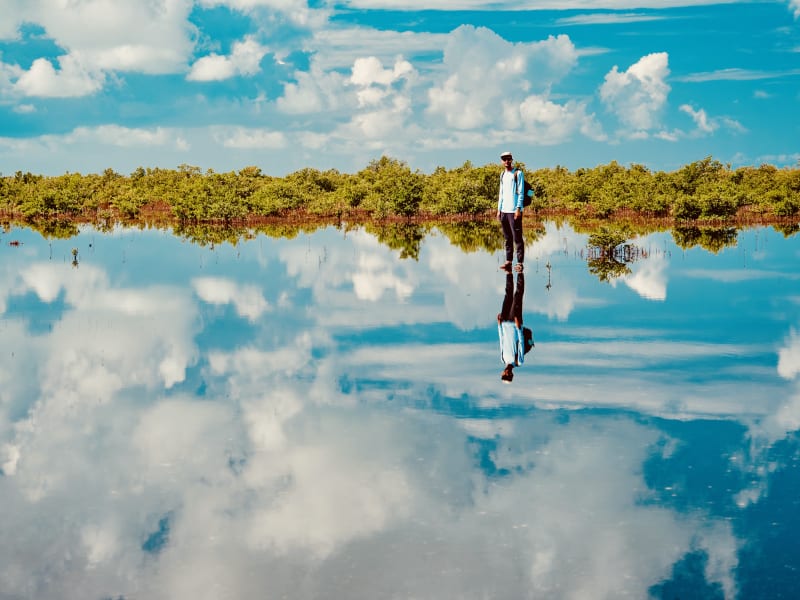
Moxy Bush Mangroves
Mangroves that shelter juvenile fish, conch, and lobster. Students tell the species apart by leaf shape.
Admiral Cockburn Land & Sea National Park
A marine protected area of reef, seagrass, and mangrove, used for long-term monitoring.
The Reef Is the Economy. The Economy Is the Reef.
Queen conch and spiny lobster sustain the island. Tourism is arriving. And the barrier reef system wrapping South Caicos holds everything together. Students earn PADI Open Water and Advanced Open Water certification across the first half of the semester, then take their training to the reef: logging transects on coral health, assessing queen conch inside and outside marine protected areas, and collecting conch catch data alongside the fishermen who harvest them. Prefer to stay at the surface? Snorkelers take part in every survey.
Marine Science, Hands On
Four courses integrate marine ecology, fisheries science, and conservation governance into a 16-credit program built around fieldwork in the water. Students assess queen conch populations inside and outside MPAs, survey lionfish habitat associations and dissect specimens, and analyze their data in R Studio, all building toward Directed Research defined with local stakeholders.
Courses
4 courses · 16 credits · 15 weeks
In-water surveys of coral reefs, seagrass meadows, and mangroves: species identification, photography, and four-hour seagrass assessments analyzed in R Studio.
View Syllabus (PDF)Eight-hour queen conch population assessments inside versus outside MPAs, lionfish surveys with dissections, and fisheries stock assessment exercises.
View Syllabus (PDF)Sense of Place field exercises, Total Economic Valuation of ecosystems, stakeholder negotiation simulations, and an expedition to North and Middle Caicos.
View Syllabus (PDF)Faculty-led research: past projects include lobster casita habitat monitoring, coastal ecosystem-services valuation, and nearshore reef soundscape mapping.
View Syllabus (PDF)

Study Marine Science in the Atlantic
Now enrolling for Spring 2027 and Fall 2027.
Dates & Costs
Semester program: 15 weeks, 16 credits. Financial aid and SFS scholarships available.


